Ford vs. Ferrari: Why it's sport’s greatest rivalry
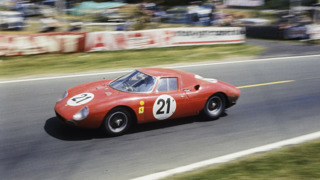
Rivalries have shaped the history of motorsport, but few have been so significant than the war that broke out between Ford and Ferrari in 1963.
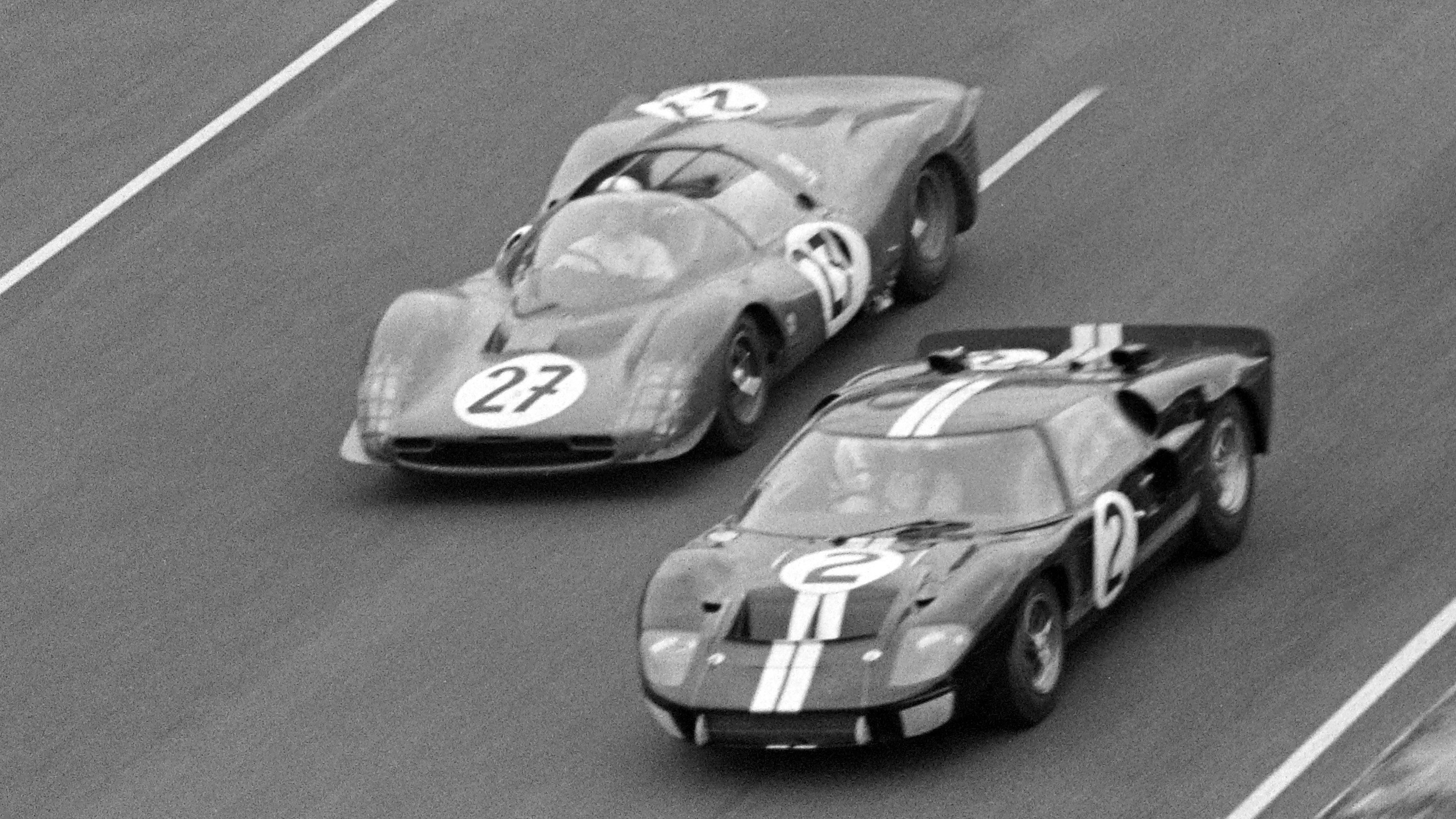
When you think of all the most notable motorsport rivalries — Prost vs. Senna, Hunt vs. Lauda, Hill vs. Schumacher, Rossi vs. Stoner, Nuvolari vs. Varzi, Foyt vs. Andretti, Sheene vs. Roberts — they’re epic stories forged by superstars going head-to-head on the racetrack, but none had the potential to transform an entire industry quite like this one.
By the late 1950s, Ford Motor Company had become a global automotive powerhouse. It had stabilised after suffering serious financial turmoil in the wake of World War II, but under the leadership of Henry Ford II it had developed a huge range of popular road cars and built up substantial financial power.
Ferrari, on the other hand, was seeking a business partner to handle the manufacture of its road cars so more time could be spent on the continued motorsport success of Scuderia Ferrari.
Negotiations between two of the most famous car manufacturers in the world began in 1963 when Enzo Ferrari reached out to Ford. The American company was keen to expand into Europe, and sporting success was deemed as essential in that mission.
The talks went smoothly enough, and a contract was drawn up, but Enzo became infuriated when the autonomy of his own Ferrari team was put into doubt, so he tore up the documents and the deal was off.
Henry Ford II, however, remained determined to prove his company’s capabilities on the racetrack, so in June of 1963 he ordered the development of a brand-new prototype for the 1964 Le Mans 24 Hours.
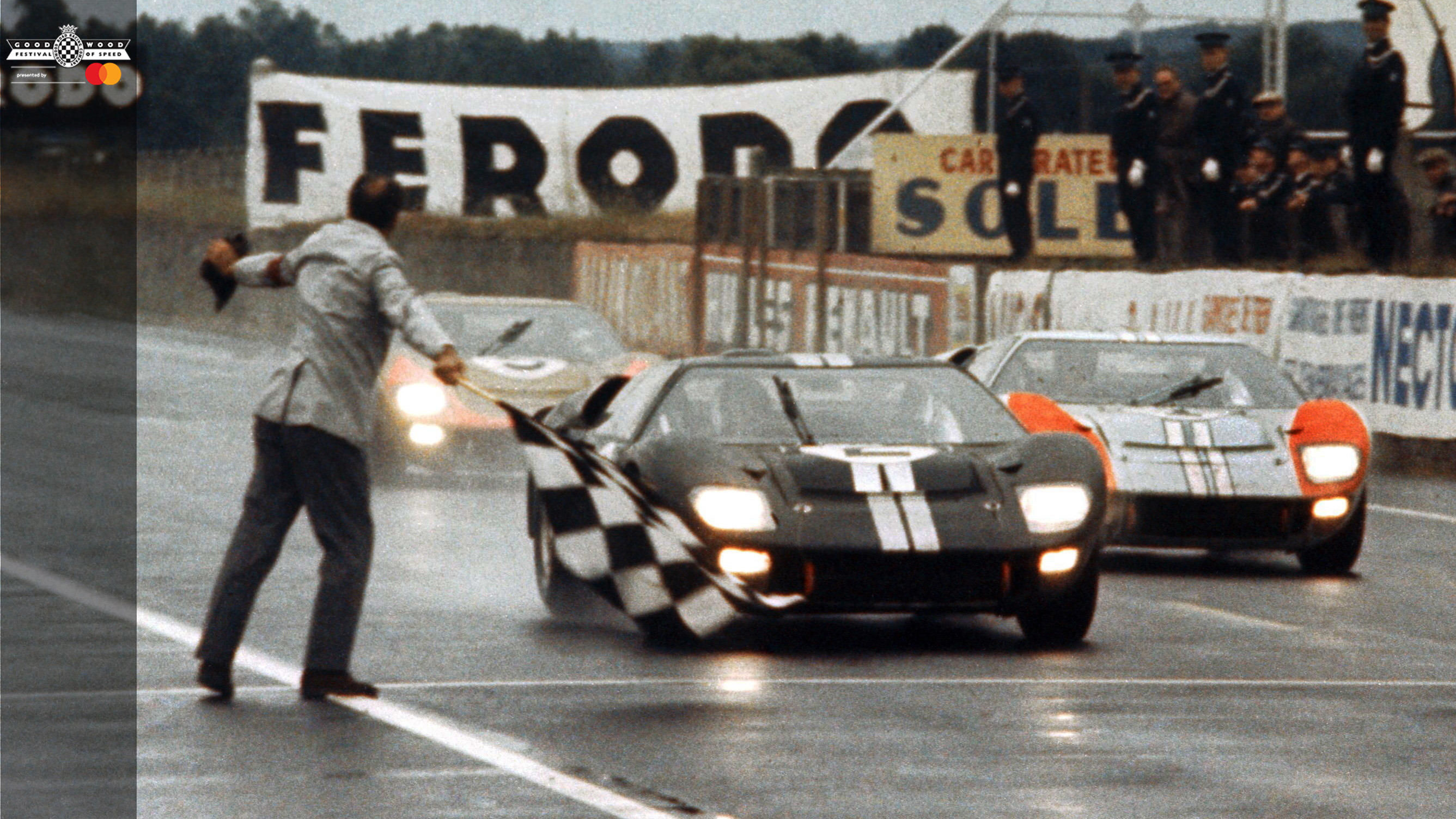
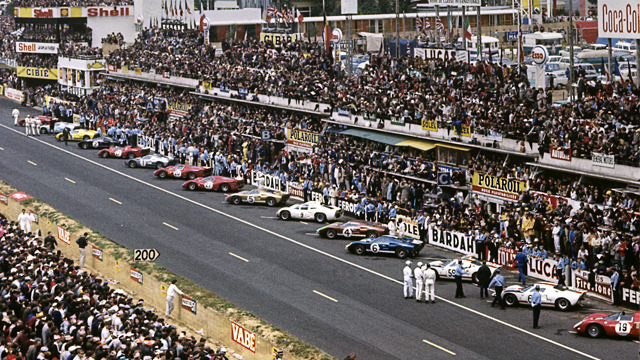
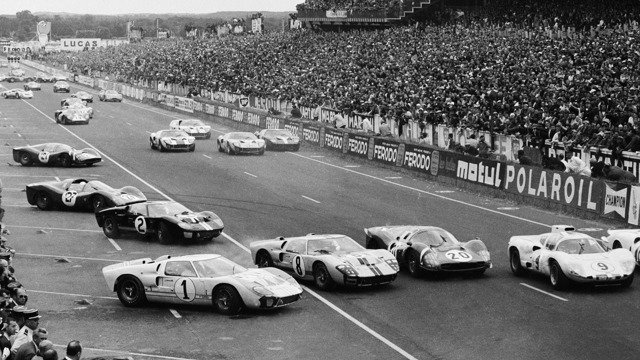
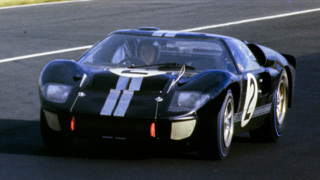
Ford threw absolutely everything at its efforts to end the dominance of Ferrari at the Circuit de la Sarthe, with an almost maniacal obsession. Millions, perhaps even hundreds of millions of dollars were spent on the development of the GT40 over the next three years, all so that Ford could get one over on Ferrari.
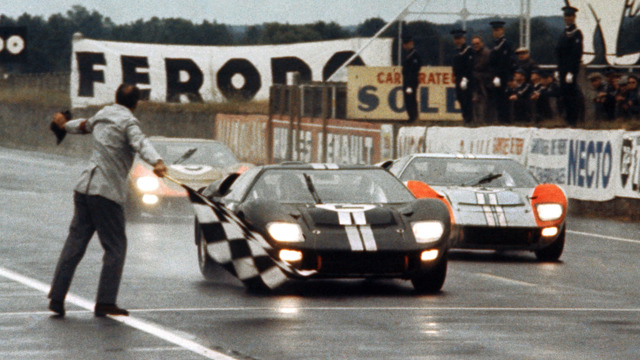
And it was worth it, because the resulting story of that 1966 Le Mans 24 Hours race has become one of the most iconic in motorsport.
After Ford had enlisted the help of Carroll Shelby to run the GT40 programme, and the MkII had been developed, the Ford Motor Company with Shelby American arrived a that year’s Le Mans with no fewer than eight GT40s powered by 7.0-litre V8s, supplemented by five customer-run MkIs.
By now, after a couple of pretty dismal failures in ‘64 and ‘65, Henry Ford was hell bent on wiping out Ferrari once and for all.
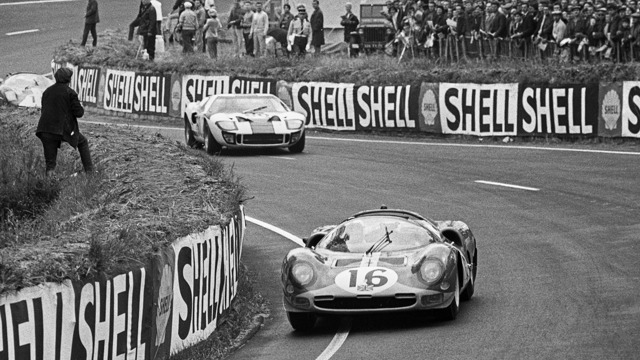
The dominance of the GT40 in that ‘66 race remains one of the most remarkable performances in the history of Le Mans and endurance racing more broadly. Ferrari was well and truly beaten, and Ford was finally triumphant.
Such was the dominance of the Fords a year later; the rules were changed to inhibit their performance. The unlimited engine class was scrapped, and although Ford and Shelby walked away from endurance racing, the GT40s remained world beaters. The Mk1s, with their 4.9-litre V8s returned to win again in 1968 and ‘69, giving Ford’s creation an unprecedented four consecutive wins at Le Mans.
Like all things, especially during this inherently dangerous era of motorsport, the GT40 project came a cost. In the pursuit of greatness, these cars were now capable of travelling at well over 200mph, and technological advancement had reached unprecedented heights.
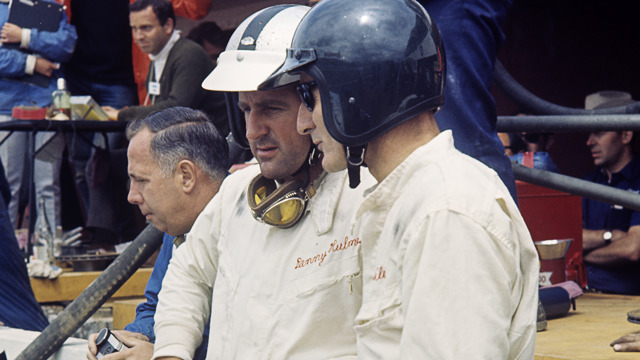
Ken Miles was one of the leading drivers for Ford, and he was killed while testing the J-car, which would eventually become the ‘67 Le Mans-winning GT40 MkIV. He had been deeply engrained in the project from the beginning and had been robbed of victory in 1966 when Ford decided to choreograph a photo finish, yet his dedication to what Ford was trying to achieve underlined how important this was to the people involved.
Rivalries like this are rooted in passion. At the heart of it all is a love of racing and a will to win. Add in a healthy dose of personal vendetta and you end up with the kind of stories that will be at the heart of the celebrations at the 2026 Festival of Speed presented by Mastercard.
Success of that magnitude simply wouldn’t be possible without the kind of motivation that this intense competition provides.
Ford vs. Ferrari is one of the most incredible stories in sport. Emotions ran high, but most importantly it brought together the world’s most talented engineers and drivers, on both sides, culminating in a moment that has gone down in legend.
We can’t wait to see how this brilliant chapter comes to back life in front of our eyes when the Festival of Speed gets underway.
Tickets are now available for the 2026 Goodwood Festival of Speed. If you’re not already part of the GRRC, you can sign up to the Fellowship today and save ten per cent on your 2026 tickets and grandstand passes, as well as enjoying a whole host of other on-event perks.
Images courtesy of Getty Images.
race
historic
festival of speed
fos 2026
The Rivals
ford
ferrari
Le Mans 1966