

When Panoz set out to conquer Le Mans
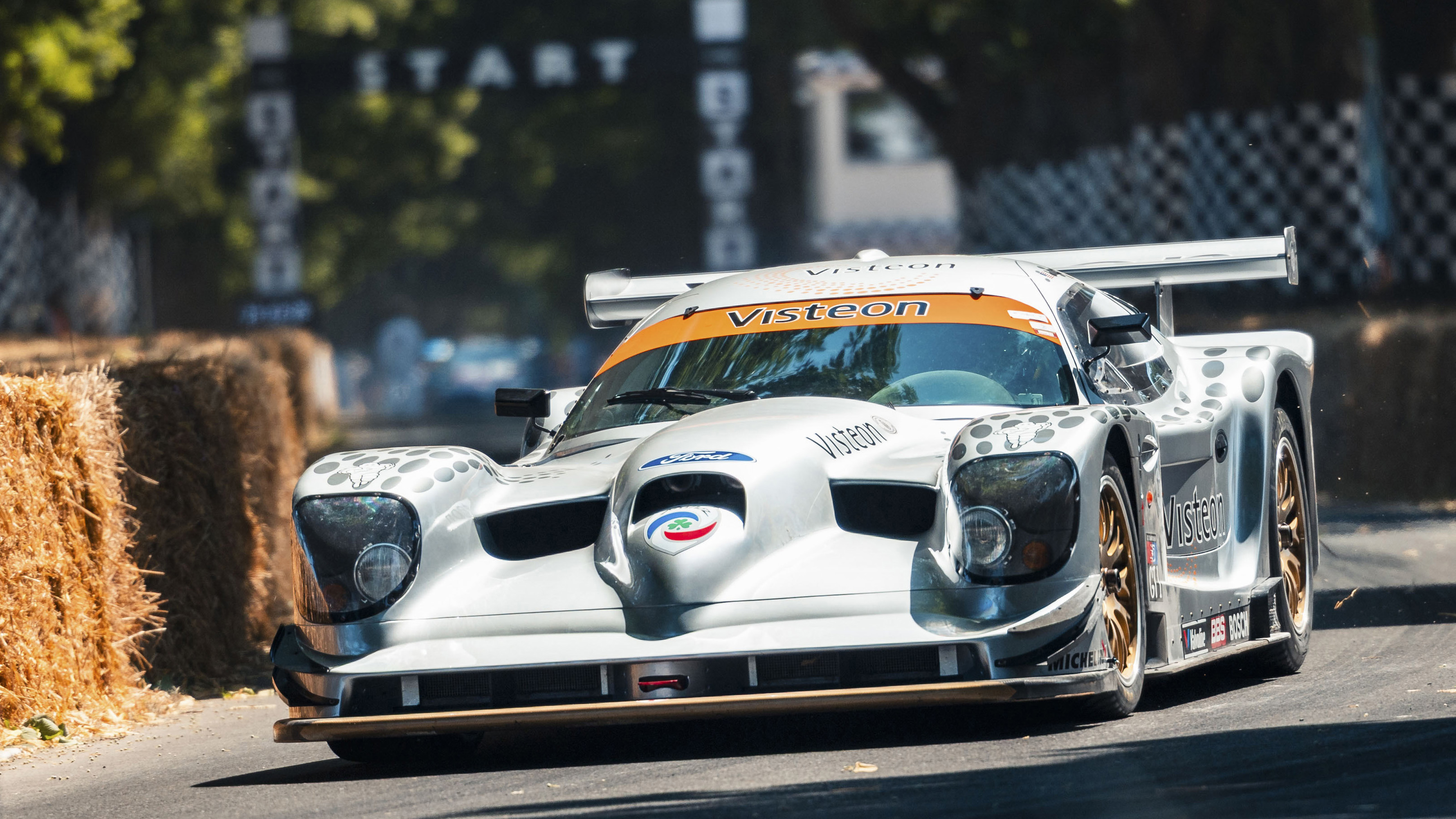
Remember when a tiny American automotive company developed a car with the ambition of winning the Le Mans 24 Hours? The story of Panoz is a remarkable one, and at the 2026 Festival of Speed presented by Mastercard we took a closer look at the cars that helped to put the company on the map.
The Panoz family made its money in the pharmaceutical sector. Don Panoz, whose grandfather and father, Eugene Panunzio, had emigrated from Italy to the US in the wake of the Avezzano earthquake of 1915, was at the head of a research group that invented the transdermal patch, something we perhaps best recognise today as a treatment for nicotine addiction.
Over the years Eugene ended up in Ireland, where his drug delivery business grew to become the first Irish company listed publicly on the US stock market. That was just one of many of his ventures, most of which brought financial success.
He was the one to first shorten the name to Panoz; little did he know that it would one day grace the world's greatest endurance race.
After nearly three decades of success, Don agreed to fund a new venture for his son, Dan, in 1989. He called it Panoz Auto Development.
Prior to that, Dan had already been busy importing Autokraft-made Cobra MkIVs to the US, but he wanted more creative control.
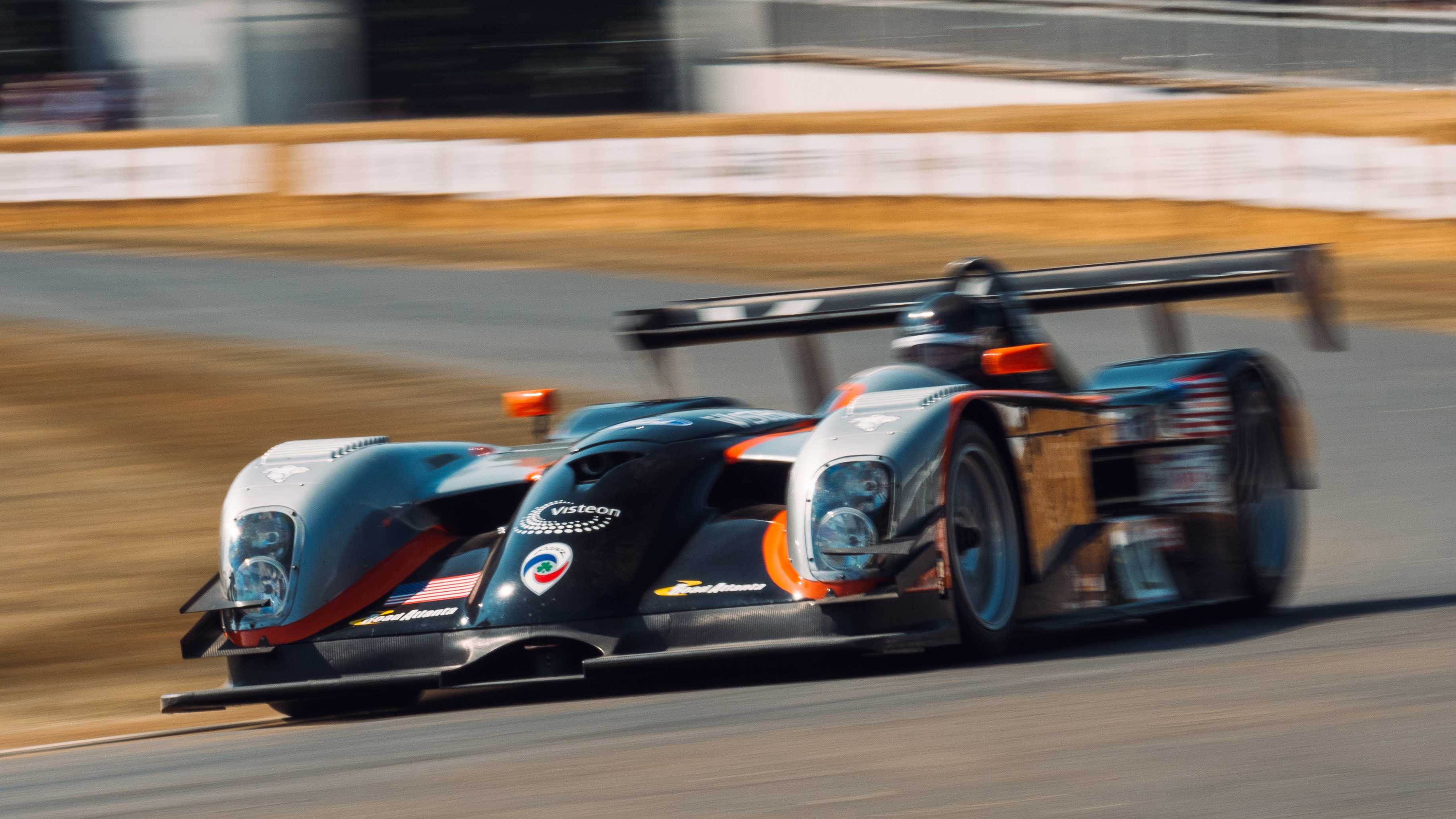
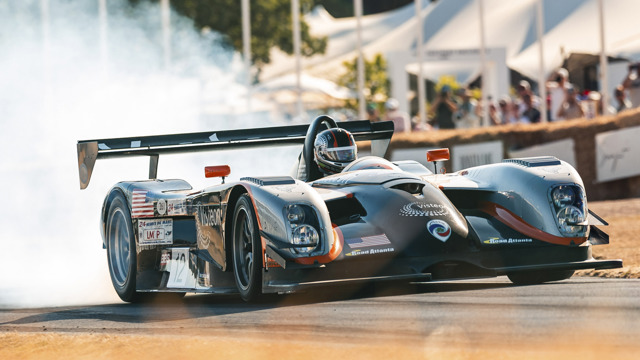
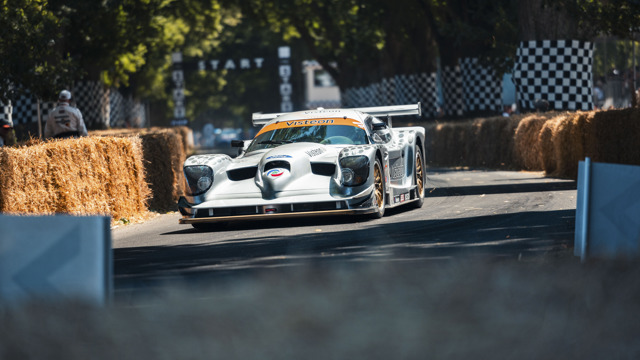
The Panoz LMP-1 Roadster S took to the Hill at the 2026 Festival of Speed.
Throughout the early 1990s Panoz's primary focus was on its Roadster sportscar, which launched in 1992 with minimal fanfare. Panoz had acquired a chassis designed by the influential engineer Frank Costin, which was originally intended for an Irish sportscar, the TMC Costin, and built a lightweight aluminium body to cover it.
It was similar to a Caterham 7 in concept and looks, but there was one distinction that would go on to define all future creations of Panoz — a 5.0-litre V8 tucked under the bonnet. A remarkable thing indeed, just 44 were built and sold between 1992 and 1995.
Somewhat more remarkable, however, is that Panoz went from a niche little sportscar to Le Mans in a little over five years.
American motorsport had been a long time away from the Circuit de la Sarthe, not since Ford's remarkable run with the GT40 had a car from the US won the world's toughest endurance race. Panoz had the ambition and the capability to at least give it a go.
The first major step in that journey was the formulation of a partnership with Reynard Motorsport, which had claimed the IndyCar Series title and victory at the Indy 500 with its 95I car in 1995.
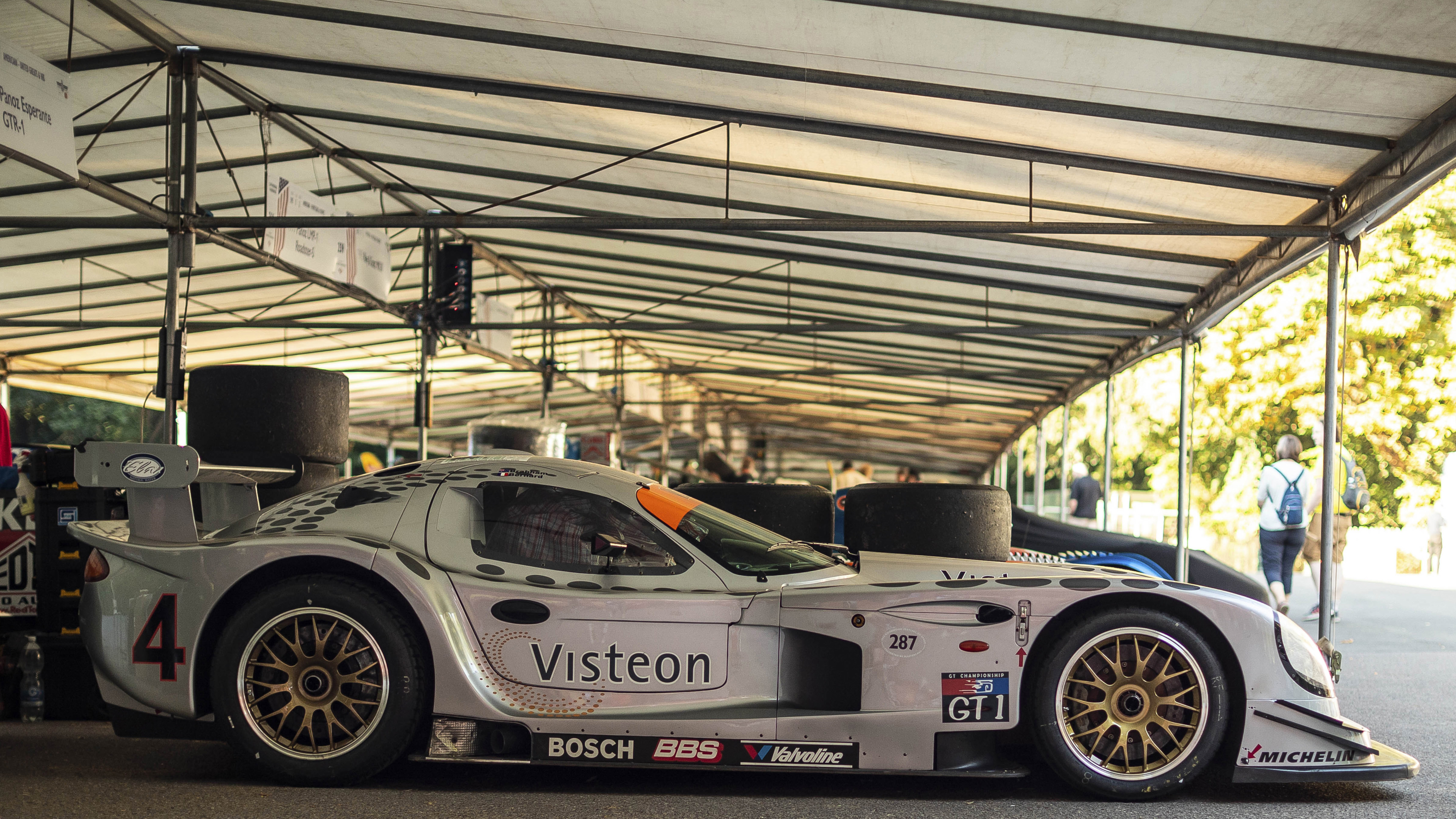
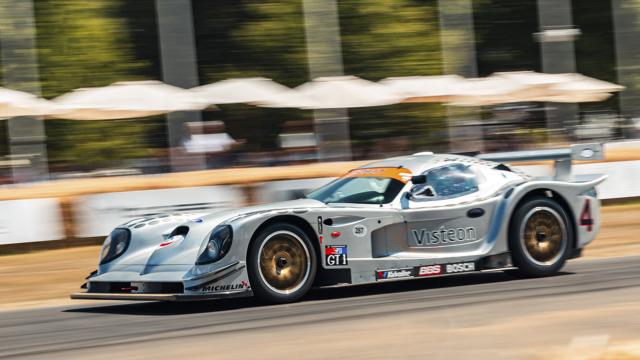
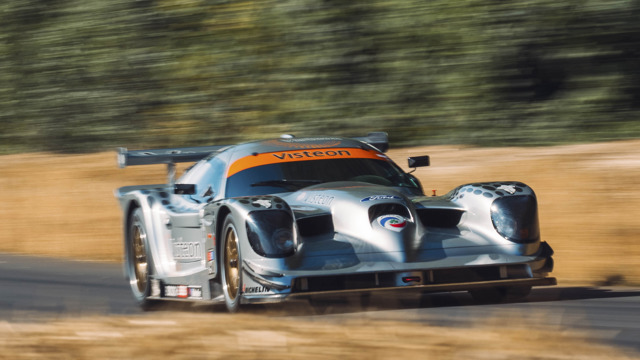
The Panoz Esperante GTR-1 joined our Americana Celebration presented by Bank of America.
Work on the first Panoz-Reynard collaboration began in 1996, a GT racer intended to compete in the newly formed FIA GT Championship. It was called the Esperante GTR-1, and six were built for competition.
The GTR-1 was actually developed around existing plans for Panoz's next road car, the Esperante, which eventually went into production in the year 2000. It was Don Panoz who dictated the fundamentals of that design, which were to maintain the feeling of American car design, and position the engine at the front.
That meant going against the general theme of racing prototypes, which were all well and truly wedded to a rear-mid-engined layout, and meant the cars arriving on the grid for the first time at the Sebring 12 Hours had an eye-catching look.
The engine was at the front, but positioned way back behind the front axle, essentially still in the middle of the car. The cockpit as a result was thrown right over the top of the rear axle to create space for the enormous 6.0-litre V8 to do its thing.
Panoz enlisted the help of long-time Ford ally Roush to develop a modified version of Ford's 4.6-litre V8, which would also power the Esperante road car, to give the GTR-1 the power it needed to take on the likes of McLaren, BMW, Porsche and Mercedes-Benz.
After failing to finish at Sebring, Panoz won the IMSA GT race at Road Atlanta, a track that Don Panoz had purchased six-months earlier, and took a class victory at Watkins Glen. The groundwork had been laid and Panoz, together with Reynard and Roush, were off to Le Mans.
At the 2026 Festival of Speed, we were able to take a closer look at Esperante GTR-1 Chassis 4, which raced for the first time at Silverstone in the FIA GT Championship, where David Brabham and Perry McCarthy qualified second on the grid, before falling to 13th in the race.
Chassis 4 was one of the cars provided to David Price Racing, and successfully completed pre-qualifying at Le Mans on 4th May 1997. It returned to Le Mans for the 24 Hours in June, raced by Brabham, McCarthy and Doc Bundy, whom Panoz had brought over from its IMSA programme.
Racing as car number 55, they lined up only 30th on the grid, some six seconds off the pace of the quickest GT1 runner. Panoz was faced suddenly by a wealth of world-class organisations with vastly more experience racing on the world stage, and the Esperante was still very early in its development.
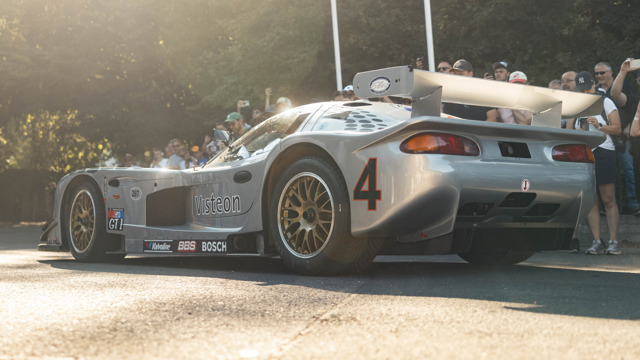
That said, Chassis 4, despite suffering several early troubles, was running quickly and was battling for a top ten spot when a dramatic engine fire put an end to their efforts at the halfway mark. In total the car completed 145 laps.
From there, Chassis 4 saw out the rest of the FIA GT season, racing at the Nürburgring, Spa, Donington and Laguna Seca, claiming a best result of eighth.
Panoz came to understand that the Esperante GTR-1 was not going to be capable of competing globally, and the Le Mans 24 Hours was still a long way out of reach, so decisions were made quickly to prepare the next angle of attack. The FIA GT Championship abandoned the GT1 class for 1999 and beyond, which meant the door for Panoz to compete in Europe was closed.
Don Panoz had also been instrumental in forming the brand new American Le Mans Series, which would run for the first time in 1999, and he wanted a car that would be able to compete for victories there, too.
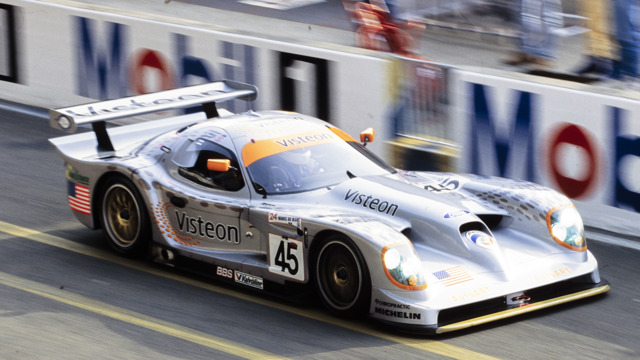
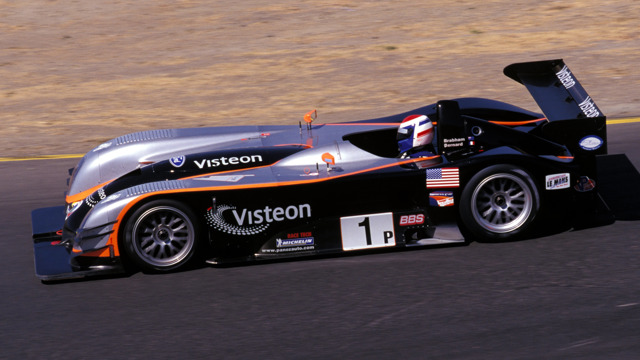
The team decided to switch to the more globally recognised Le Mans Prototype class and developed a whole new car for the project.
Reynard was retained to carry out the design work for the newly conceived Panoz LMP-1 Roadster S, and the brief was simple: make it quicker, but keep the engine at the front.
The results were, again, striking to behold, and as per the LMP regulations of the time it featured an open cockpit. The aerodynamics were far more aggressive this time around, with more substantial nose intakes and sculpted gulleys that shovelled air around the rest of the car. A distinct lack of any meaningful rear bodywork also meant the rear wing had to be bolted onto the diffuser itself, there really was nothing else like it.
Likewise, the engine, another 6.0-litre V8, this time produced another of Don Panoz's subsidiaries, Élan Motorsport Technologies.
Eight LMP-1 Roadster Ss were built for the 1999 season and Chassis 1 was here at the Festival of Speed for a reprisal of its on-track exploits. A particularly special car indeed, it stands as perhaps the most successful car Panoz ever produced.
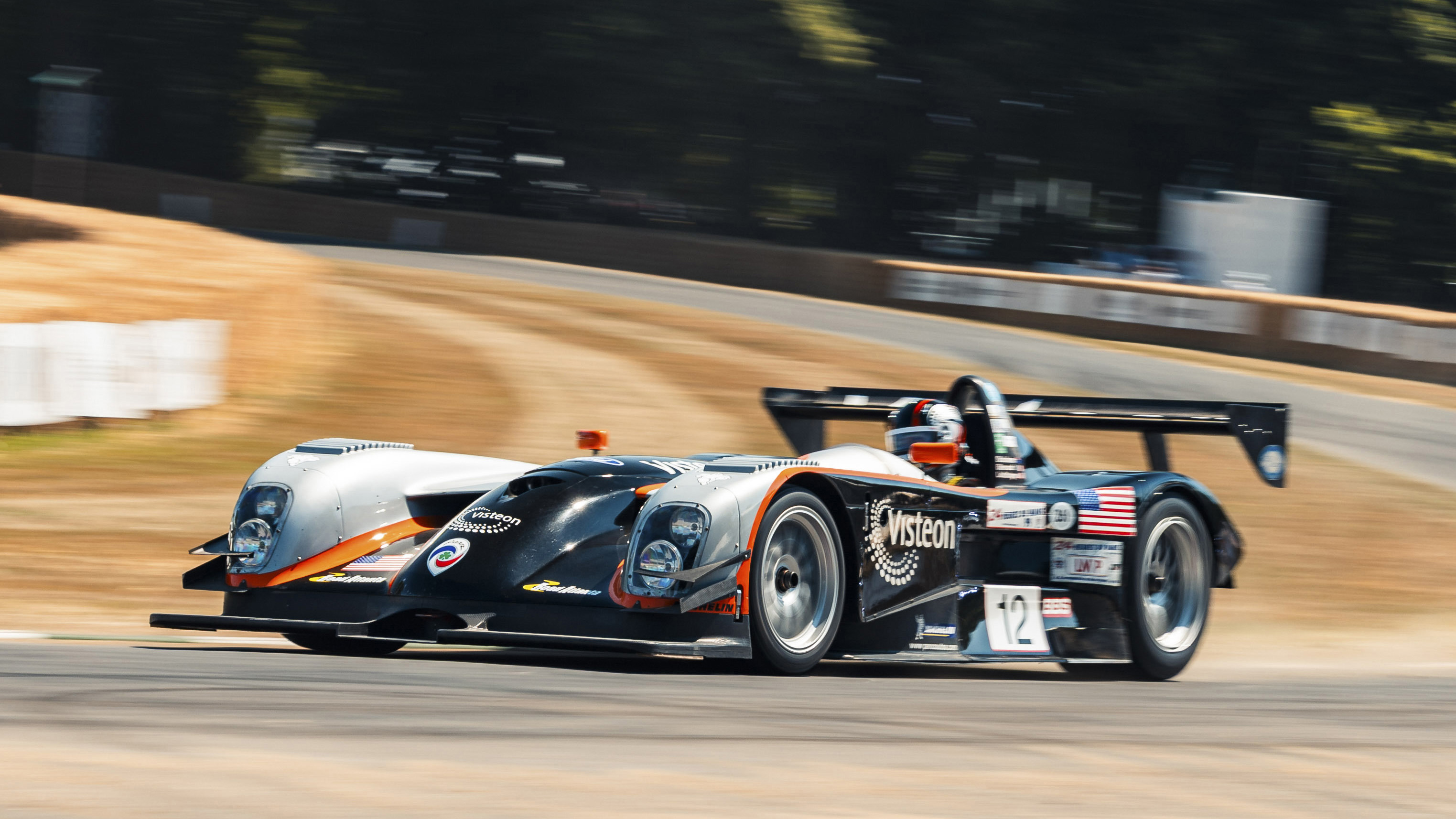
After making its debut at Road Atlanta, finishing a respectable fifth, Chassis 1, driven by the team of David Brabham and Éric Bernard, put the world on notice when it set the second fastest time in prequalifying for the Le Mans 24 Hours. Brabham completed a lap in 3:31.9, mere hundredths of a second slower than Martin Brundle's Toyota GT-One, to prove that Panoz had made a huge step forward with its new LMP1 machine.
The team eventually qualified fifth on the grid but nonetheless impressed the watching world. Brabham and Bernard were joined by American Butch Leitzinger for the race itself, and they performed admirably throughout, eventually finishing seventh after 24 Hours, albeit some 30 laps back from the winning BMW V12 LMR.
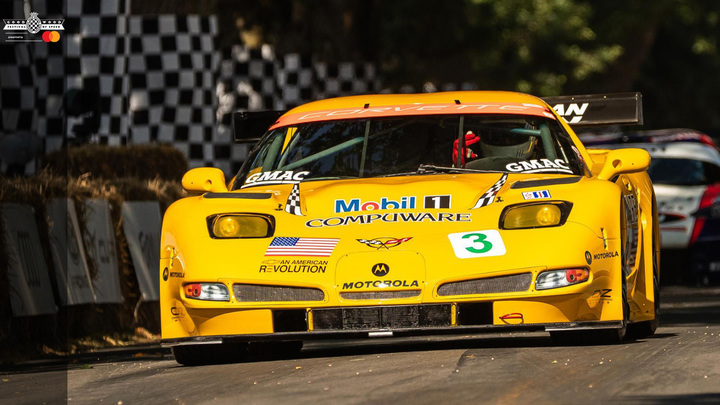
With that result, Panoz had achieved a major milestone. Finishing the world's toughest endurance test, with not just Chassis 1, but the second car, too, which was completed just barely in time for the race.
But that was only the beginning for the LMP-1 Roadster S, because both of those cars were shipped back to the US and immediately thrown back into action at Mosport for the next round of the ALMS.
Panoz claimed a remarkable one-two finish, with Chassis 2 leading home Chassis 1, kickstarting a run of results which saw Brabham and Bernard claim further victories for the manufacturer at Portland and the Petit Le Mans at Road Atlanta.
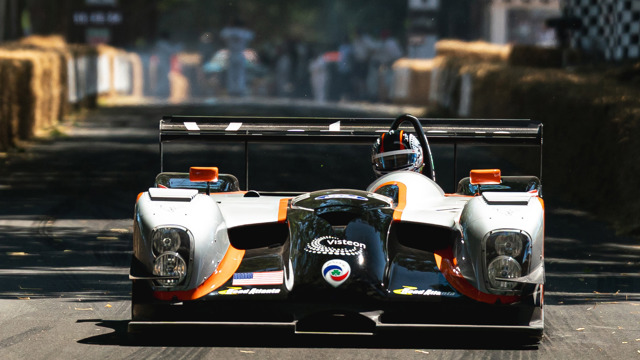
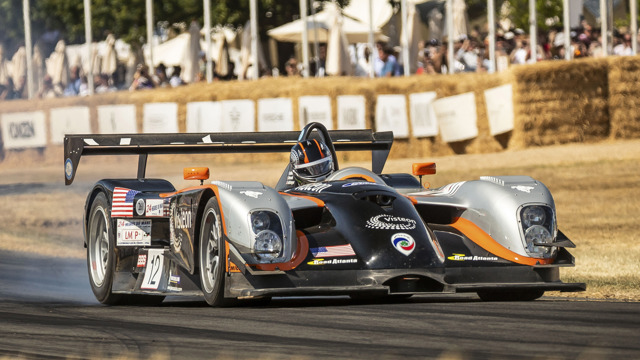
The pair just barely missed out on claiming the inaugural ALMS Drivers' title after disappointing retirements from the final two races of the season, but Panoz claimed both the Manufacturers' and Team's Championships, seeing off BMW, Ferrari and Porsche.
Chassis 1 was sold to Team Dragon for the following season, and continued its impressive run at Le Mans to finish eighth, but the LMP-1 Roadster S was already beginning to show its age, and Panoz eventually developed the LMP01 Evo to take over racing duties.
After matching its best finish of fifth overall at Le Mans in 2003, however, Panoz eventually pulled out of the LMP1 class after 2004. The dream of returning America to the top step of the podium at La Sarthe was over, for now at least.
The team decided instead to run a more recognisable version of the Esperante road car, the GT-LM, in the GT2 category, and spectacularly won the class with Team LNT in 2006.
It was a moment that finally fulfilled the dream of both Don and Dan, who had begun the journey all the way back in 1989, but that was the last time to date that we've seen a Panoz at the Le Mans 24 Hours.
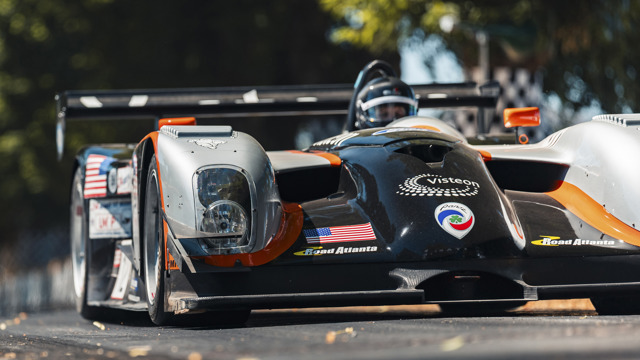
The name has continued to appear throughout American motorsport, though, Panoz purchased G-Force, a chassis constructor prevalent in IndyCar at the time, in 2002, and won races with Chip Ganassi in 2003, 2005 and 2006.
More recently, Panoz has been involved in GT4 racing with the Avezzano, but we will forever remember those great machines that broke down walls at Le Mans, and proved the Americans still had what it took to battle with the best of them.
Photography by Charlie Brenninkmeijer, Joe Harding, Izzie Fitzgerald, Tom Shaxson, Rob Cooper and Sam Milton.
Historical images courtesy of Getty Images.
The 2027 Festival of Speed will take place on 15th-18th July 2027, sign up for ticket alerts to make sure you don't miss out. Tickets are available for GRRC Members and Fellows, you can join the Fellowship today.
festival of speed
fos
fos 2026
event coverage
panoz
Subscribe to Goodwood Road & Racing
Thank you, you’re now subscribed

How many hay bales are used at FOS?
For the last two years, 5,800 bales have been recylced into the biomass energy centre to be used for energy generation